Market Movers
- 4.2
- Rating
- 100.00K
- Installs
- Free
- Price

 Analysis by App-foxy
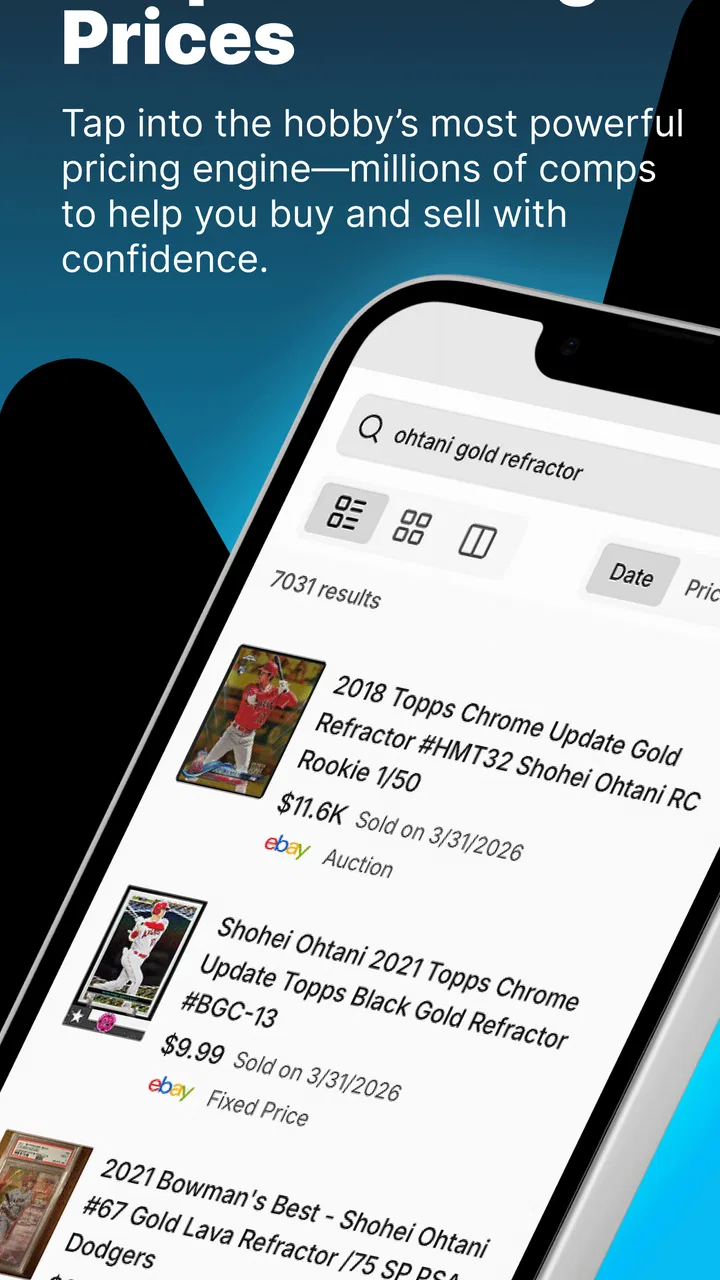
I spent time with Market Movers as a sports card and trading card research app, and I quickly understood its appeal: it tries to put the information a collector needs into one mobile workspace instead of making every decision through scattered searches. The app is made by Sports Card Investor, falls under Sports, and is free to install, although it includes optional in-app purchases ranging from $9.99 to $499.99 per item. My overall impression is that it is most useful when collecting has moved beyond casual browsing and you want a more organized way to think about cards, trends, and potential purchases.
The app has a 4.2 average from around 500 ratings, with more than 100K installs. Those figures suggest a real audience without making Market Movers feel like an unavoidable mainstream utility. I would describe it as a focused tool for people who already care about sports cards or trading card games and want more structure around that interest. It is rated for Everyone, runs on Android 7.0 or later, and the current version is 5.4.0, so it is accessible to a broad range of Android users.
How Market Movers Works in a Shared Household
When more than one person in my household collects, I find it helps to agree on what a shared search is meant to answer before opening Market Movers. We can compare a card together without confusing research with ownership, and a simple separate note can keep each person’s budget and collecting goal clear. That small habit makes the app a better starting point for discussion, rather than a substitute for household records.
You May Also Like

 Blood Strike: 2.5 Anniversary
Blood Strike’s Loadouts Turn Every Drop Into a Tactical Gamble
A close look at Blood Strike’s custom loadouts: how fast access to signature weapons reshapes its battle royale rhythm, rewards preparation, and narrows the gap between fights.

 Pandora - Music & Podcasts
Pandora’s Music Is Easy to Start, but Harder to Recover
Pandora’s strength is its low-effort path from a seed to a station. Its weak spot is how much confidence it asks you to place in connection, setup, and quiet recovery.

 8 Ball Pool
 Is Built on Rivalries, Rematches, and Routine
A close look at the rivalries, rematches, shared routines, and unanswered safety questions that turn a quick pool match into a persistent mobile community.

 Samsung Music
’s Quiet Strength Is Playing What You Already Own
Its reach comes less from spectacle than from dependable access to a personal library. That simplicity is both the app’s strongest retention engine and its ceiling.

 AccuWeather: Weather Radar
AccuWeather Review: A Quick, Clear Forecast for Everyday Decisions
For everyday plans, the best forecast is the one you can understand quickly. AccuWeather makes rain timing, radar, and local conditions easy to act on, with a few trade-offs.

 Hill Climb Racing
Why Hill Climb Racing Still Turns Crashes Into One More Run
A tiny car, a bumpy hill and one more upgrade: Hill Climb Racing keeps resurfacing because its simple chaos makes every near-miss feel personal.
More From Our News Desk



One phone, several collecting habits
A realistic use case is a household where one person follows basketball cards, another collects baseball cards, and a younger family member is interested in trading card games. On a shared tablet or phone, Market Movers can become a common place to look up cards and discuss buying decisions. That is more practical than passing around screenshots from unrelated websites, especially when someone wants to compare a card while another person is watching a game or sorting through a collection.
I found the app easier to appreciate when I treated it as a conversation aid rather than a magic buying button. A parent might use it to examine a card before agreeing to a purchase, while a teenager can use the same research process to explain why a particular card matters to them. The useful part is not simply opening an app and seeing information; it is having a repeatable place to start a discussion about condition, demand, timing, and personal collecting goals.
That shared-device scenario also exposes an important limitation. Market Movers is not a family organizer, household inventory system, or dedicated multi-user collection manager. I would not expect each person’s preferences, searches, and decisions to remain neatly separated just because several people use the same device. If your household needs strict personal boundaries, separate tracking, or a clear record of who researched or purchased each card, you should establish that process outside the app.
A practical evening workflow
Imagine coming home with a card from a local trade. Instead of immediately deciding whether it was a good deal, I would open Market Movers, search for the relevant player or card, and use the available information to frame the decision. I would then discuss the result with the other collector in the household, checking whether the card fits a long-term collection, a short-term interest, or neither.
This workflow is valuable because it slows down impulse buying. A card can feel exciting in person, particularly when a seller creates urgency, but a few minutes of organized research can reveal whether the excitement comes from the card itself or from the pressure of the moment. I would still inspect the physical card carefully and consider its condition; an app cannot replace looking for centering, corners, surface issues, authenticity concerns, or differences between comparable versions.
My more unusual tip is to use the app before visiting a show or shop, not only while standing in front of a seller. Make a short mental list of the cards or players that genuinely interest you, then use the app to prepare questions and a spending limit. That changes Market Movers from a reaction tool into a planning tool. It also makes shared collecting less chaotic because everyone knows what the household is actually trying to find.
Keeping personal interests from becoming household confusion
Shared use works best when each person says what they are researching and why. One person may be checking a card for personal enjoyment, while another is considering it as part of a longer-term collecting strategy. Those are different standards, and the app cannot decide which one matters more. I recommend saying that purpose out loud before discussing the result.
For example, a card can be a sensible purchase for a favorite-player collection even when it is not the strongest choice for someone focused on resale potential. If a household treats every number or trend as a command, disagreements are almost guaranteed. I use Market Movers as evidence to consider, not as an authority that removes judgment from the process.
Setup boundaries before anyone starts searching
Because Market Movers is free to install but offers paid items inside the app, I would set clear household rules before handing a shared device to a child or another family member. The important question is not only whether the app can be opened; it is whether everyone understands that research and purchasing are separate actions. A younger user may reasonably explore cards without realizing that an optional feature or item can involve real money.
I would keep payment decisions with the adult responsible for the device and explain that no purchase should happen without permission. This is especially important because the listed in-app purchase range is wide, reaching from $9.99 to $499.99 per item. That does not mean every user will encounter a large charge, but it does mean a casual tap should never be treated as harmless in a shared household.
Before using the app together, I would also decide whether the device is for browsing only, whether subscriptions or paid tools require discussion, and whether research should happen under one household account or separate personal accounts. The right answer depends on how your family uses the phone, but making the decision in advance prevents arguments later.
There is another boundary worth setting: Market Movers should not be presented to children as a guaranteed way to make money. Its subject is financially adjacent, and sports cards can encourage speculation. I would describe it as a research and decision-support app, then emphasize that collecting involves uncertainty. A card’s past movement does not promise a future result, and a popular player can remain popular without making every related card a good purchase.
Why account separation matters
On a personal phone, I can tolerate a little ambiguity between my own searches and saved interests. On a shared device, that ambiguity becomes inconvenient. One person may open the app expecting to continue researching one sport and find that the visible context reflects someone else’s hobby. Even without inventing special account behavior, the practical lesson is simple: do not assume that a shared installation automatically creates clean personal spaces.
If several people use the same device, I would keep a basic household note with each person’s focus, budget, and current research questions. That sounds old-fashioned, but it prevents the app from carrying more organizational responsibility than it was designed to carry. Market Movers can support the research conversation; it should not be the only place where your household records ownership, spending, or promises made during trades.
Coordinating purchases without turning research into pressure
Market Movers is particularly useful when two people are considering the same purchase but have different opinions. Instead of arguing from memory, each person can explain which card details and market signals influenced them. I like this approach because it makes the disagreement specific. One person may care about a favorite athlete, while another is looking at scarcity, condition, or recent interest.
A helpful household routine is to separate a decision into three stages. First, identify the exact card and version. Second, examine the available market information and compare it with the physical item in front of you. Third, decide whether the purchase fits the agreed budget and collecting purpose. The app is most valuable in the middle stage, but the first and third stages stop research from becoming a substitute for basic caution.
One non-obvious trade-off is that a data-focused workflow can reduce the fun if it is used for every small trade. Not every card needs a formal investigation. For inexpensive cards or personal favorites, the emotional value may matter more than optimization. I would reserve the app’s deeper attention for cards where the price, condition, or long-term intention makes the decision meaningful.
Working together when interests do not match
A household does not need to collect the same sport to benefit from the app. In fact, different interests can make the research more educational. A baseball collector can show a trading card game fan how player demand affects attention, while the younger collector can explain why a particular game card matters beyond a simple price comparison. The app becomes a shared vocabulary, even when the collections remain separate.
Still, I would avoid combining everyone’s cards into one informal “household value.” That can create tension when one person’s favorite cards are treated as a shared investment. Keep personal ownership clear, especially when adults and children are involved. Market Movers may help you discuss a card, but it does not replace an honest agreement about who owns it and who is allowed to trade it.
Age, trust, and responsible use
The Everyone content rating makes the app approachable for a wide audience, but an age label is not the same as financial guidance. I would feel comfortable introducing it to a young collector as part of a supervised conversation about cards, but I would not leave the child responsible for purchase decisions simply because the app itself is age-rated for everyone.
The best lesson is to ask questions: Why do you want this card? What makes it different from another version? Are you buying it because you like it or because someone said it will rise? What happens if interest changes? These questions turn the app into a learning tool rather than a source of authority. They also help children understand that market information can be useful without being a promise.
Trust also matters between adults. If one person uses the app to justify every purchase, another household member may feel that the numbers are being used to win an argument. I recommend sharing the reasoning, not just the conclusion. Show what you looked at, explain what remains uncertain, and admit when the personal collecting goal matters more than the market case.
Where it beats ordinary alternatives
The usual alternative is a mixture of web searches, marketplace browsing, social media discussions, spreadsheets, and memory. That approach can work, but it is fragmented. Market Movers has a clearer purpose: it gives sports card and trading card enthusiasts a dedicated starting point for research instead of forcing them to assemble every piece of context themselves.
I prefer it to a spreadsheet when I am still exploring a card or player, because a spreadsheet depends on me already knowing what to record. A spreadsheet becomes stronger later, when I need to track my own purchases, costs, locations, or ownership. I prefer ordinary marketplace browsing when I am ready to inspect actual listings, seller terms, shipping, and the physical condition shown in photographs. Market Movers and a marketplace answer different questions.
It is also more focused than a general sports news app. News can explain why a player is receiving attention, but it is not designed around card research. Conversely, a general notes app may help a household record decisions, but it will not replace a specialized market-oriented workflow. The best setup for serious collectors may therefore be a combination: Market Movers for research, a personal record for ownership and spending, and direct inspection for the final purchase.
Limits I noticed in everyday use
The first limitation is that specialized information can encourage overconfidence. Seeing organized market context feels more precise than relying on a quick search, but precision is not certainty. Card condition, print differences, grading, seller reliability, timing, and personal demand can all change the practical value of a purchase. I would never use the app as the only reason to buy an expensive card.
The second limitation is the cost boundary. The free installation lowers the barrier to trying it, but optional purchases mean the full experience may not remain entirely free for every user. Since the available purchase range is substantial, a household should decide in advance whether paid features are allowed and who approves them. This is not a criticism of the app’s purpose; it is simply part of using it responsibly on a shared device.
The third limitation is fit. If you only want to browse sports news, follow scores, or enjoy cards casually without researching market movement, Market Movers may feel like more work than you need. If your main task is managing a detailed personal inventory, a dedicated collection database or spreadsheet may be better. If you are buying from a seller, direct listing research and physical inspection remain essential.
Who should use it and who should skip it
I would recommend Market Movers to collectors who regularly compare cards, want a more deliberate purchase routine, or enjoy discussing the reasoning behind a trade. It is also a good fit for a household that wants to teach a young collector how to research without handing over purchasing authority. The app gives those conversations a useful starting point while leaving the final judgment with the people involved.
I would be more cautious recommending it to someone who expects guaranteed investment results, instant answers about every card, or a complete replacement for personal records. It is not the right choice for anyone who wants a simple score app or a purely entertainment-focused sports experience. The more your goal depends on accurate ownership tracking, seller evaluation, or financial planning, the more you will need tools alongside it.
My household verdict
After using Market Movers, I see its strongest role as a shared research table for collectors. It can help a family slow down, ask better questions, and coordinate before spending money. The app is specific enough to be more useful than random searches, yet it still needs human judgment and a separate agreement about budgets, ownership, and age-appropriate access.
I would install it for a household that already enjoys sports cards or trading card games and wants a more informed way to explore the hobby. I would introduce it to younger users with supervision, keep payment authority with an adult, and avoid treating market information as a promise. For casual collectors, it may be more detail than necessary; for active researchers, that detail is exactly the reason to try it.
My final recommendation is positive, with clear boundaries. Sports Card Investor has made a focused Android app that can bring structure to card conversations, especially when several people share an interest but not always the same opinion. Use it to prepare, compare, and question your assumptions. Then make the final decision based on the actual card, your real budget, and the reason you want to own it.
FAQs for Market Movers
01What is Market Movers, and who is it designed for?
Market Movers is a market-analysis and trading research app designed to help users monitor financial instruments, study price movements, and make more informed decisions. It may be useful for beginners who want structured market information as well as experienced traders seeking charts, watchlists, alerts, and additional research tools. It should be treated as an analysis companion, not as a guarantee of profitable trades.
02What features can I expect from the Market Movers app?
The app generally focuses on organizing market information in one place, with tools such as interactive charts, watchlists, market scanners, alerts, historical data, and research or educational content. Depending on the selected plan and platform version, some advanced features may be limited or unavailable. Before downloading, users should review the current feature list, supported markets, and subscription details shown in the official store or on the developer’s website.
03Is Market Movers free to download and use?
Market Movers may be available to download at no initial cost, but access to premium research, advanced analytics, expanded data, or additional tools can require a subscription or in-app purchase. Pricing, trial periods, and renewal conditions may vary by country, operating system, and account type. Always read the payment and cancellation terms carefully before starting a free trial or entering billing information.
04Can I buy and sell stocks or other investments directly through Market Movers?
Market Movers is primarily intended for market research and analysis, so users should not assume that it functions as a complete brokerage platform. Depending on the version and available integrations, the app may provide information without executing trades directly. You will usually need a separate account with a regulated broker to place orders. Verify supported integrations and confirm data delays before relying on the app for time-sensitive decisions.
05Is Market Movers suitable for beginners, and is the information financial advice?
Market Movers can be helpful for beginners because it brings market data and analytical tools into a more organized interface, but new investors may need time to understand charts, indicators, volatility, and risk management. The app’s content should not be considered personalized financial advice or a promise of returns. Users should research independently, avoid investing money they cannot afford to lose, and consult a qualified professional when appropriate.
Pros
- Real-time market data helps track price movements as they happen.
- Custom watchlists make it easy to follow selected stocks and assets.
- Clear charts support quick visual analysis of market trends.
- Useful alerts can notify you about important price changes.
- Suitable for beginners and experienced traders monitoring markets.
Cons
- Some advanced features may require a paid subscription.
- Market data can be delayed depending on the selected asset or plan.
- The amount of information may feel overwhelming for new users.
- Trading decisions still require research beyond the app’s indicators.
- Performance may vary on older devices or slower connections.

Market Movers
Gallery